
Minimally Invasive Cavity Treatment for Children - Fort Washington, PA
Restore Your Child’s Healthy Smile Without Unnecessary Intervention
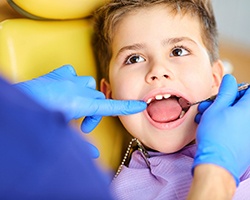
As your child grows, their primary (baby) teeth play an important role in the development of their adult smile. More invasive treatments like dental fillings that remove large portions of enamel can often be stressful for kids and can even endanger the alignment of their adult teeth. At Upper Dublin Pediatric Dentistry, it is our goal to provide minimally invasive cavity treatment that protects as much of the structure of your child’s teeth as possible. These treatments are designed to not only safeguard the affected tooth from further damage, but they’ll also allow it to remain as a placeholder for their adult smile for as long as necessary.
Why Choose Upper Dublin Pediatric Dentistry for Minimally Invasive Cavity Treatment?
- Preserves More Healthy Tooth Structure
- More Comfortable for Children
- Reduces the Risk of Needing Dental Sedation
Why Do Cavities in Kids Need to Be Treated?

Often, parents wonder why it’s so important to treat cavities in their child’s baby teeth. After all, they’re just going to fall out anyway, right? However, the truth is that baby teeth are a lot more important than you might think! Not only are they necessary to help your child properly chew a full, nutritious diet and speak clearly and confidently, but they also serve as important placeholders for their permanent teeth. Thus, when they become injured due to cavities, decay, or premature loss, they can not only throw off the alignment of their future smile, but they can also create a variety of secondary problems like an increased risk of cavities and gum disease if your child can’t properly care for them!
The Benefits of Drill-Free Cavity Treatment for Children

To treat a cavity in an adult tooth, a dentist must remove the damaged enamel and then fill in the empty space with a tooth-colored filling. While this is an ideal solution for restoring the integrity and appearance of a permanent tooth, it is often unnecessary for primary teeth. For starters, the sound and vibration of the dental drill can be scary for kids, making them less likely to want to return to the dentist, even for routine checkups. Furthermore, in many cases drill-free options can be sufficient for protecting the tooth and allowing it to remain in place until it’s ready to fall out on its own. Minimally invasive treatment can even help lessen the need for sedation, which may have otherwise been necessary to keep the child calm during their procedure.
Our Minimally Invasive Cavity Treatment Options for Kids
At Upper Dublin Pediatric Dentistry, we’re pleased to offer several minimally invasive cavity treatment options for children. To learn more, please keep reading below, or feel free to contact us with any questions!
Silver Diamine Fluoride (SDF) Treatment
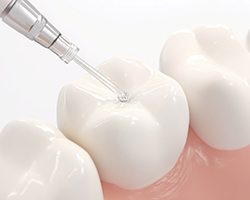
Silver diamine fluoride (SDF) is a liquid made from silver, water, fluoride, and ammonia. It is applied directly to the surface of the tooth to strengthen the enamel, preventing emerging cavities from worsening and new ones from developing. Treatment with SDF eliminates the need to remove damaged enamel and replace it with a dental filling or crown, instead allowing it to stay in place. While it will create a dark spot on the treated tooth, most children (and parents) prefer this to getting a traditional filling!
The Hall Technique
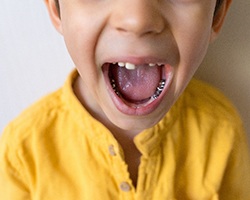
The Hall Technique uses a preformed, stainless steel dental crown to protect your child’s damaged tooth without the need for a lab-made version that would otherwise require several dental appointments to complete.
First, your child’s dentist will examine the tooth and determine if they’re a good candidate for treatment. If they are, they’ll be fitted with an appropriately sized crown that will be carefully place over the affected tooth, sealing the decay and stopping it from causing further damage. Then, their dentist will ensure that the new crown is comfortable and make modifications to the crown if it’s not. Once complete, your child can resume their normal activities, including using their crowned tooth to enjoy a full diet. The crown will stay in place until the tooth falls out on its own naturally, preserving the alignment in anticipation of their adult smile!
Which Cavity Treatment Is Right for My Child?

It is difficult to determine which cavity treatment is appropriate for your child’s smile until their teeth have been examined in person by their dentist. At their evaluation, we will take X-rays and perform a physical evaluation of the tooth or teeth in question, and with your input determine which option is the best way to protect their growing smile.
We understand that dental treatments like fillings can often be scary for children, which is why we’re pleased to offer these options, as well as sedation for those kids who need a little extra help staying calm. To learn more about our solutions and to determine which one will work best for your child, schedule a consultation with Upper Dublin Pediatric Dentistry today.
Minimally Invasive Cavity Treatment FAQs
Are There Any Risks Related to Silver Diamine Fluoride?
Silver diamine fluoride is considered a very safe option for treating tooth decay, but it does come with some minor downsides:
- It can cause the decayed part of the tooth to permanently turn black.
- If it touches the skin, it will cause a brown or white stain to appear. However, this is a purely cosmetic issue that typically only lasts around one or two weeks.
- Your child may notice a slight metallic taste following the procedure. Said taste should fade in about 10 to 15 minutes.
What Can I Expect to Happen During My Child’s Silver Diamine Fluoride Appointment?
When you bring your child to our office for silver diamine fluoride, we’ll apply some Vaseline to the area around the lips and mouth to reduce the chances of staining. We will then polish and dry the decayed tooth before applying silver diamine fluoride to the cavity. The substance will be given a minute to dry before we rinse your child’s mouth with water. Some fluoride varnish might be applied to the tooth to seal the silver diamine fluoride in place.
When is Silver Diamine Fluoride Not Recommended?
Silver diamine fluoride may not be right for your child if:
- They are allergic to silver.
- They currently have sores inside their mouth.
- The decay has grown so severe that the tooth has become infected.
In order to determine whether your child is a candidate for silver diamine fluoride, we will need to examine their tooth carefully and determine how extensive their decay is. Then we will give you our recommendation based on your little one’s specific situation.
Does the Hall Technique Hurt?
Since the Hall technique does not involve drilling or the removal of any enamel, it causes little to no discomfort. At most, your child may experience some mild pressure while the crown is being placed on their tooth. The restoration may feel unusual in your child’s mouth at first, but they should adjust to the feeling within a couple of days.
How Does the Hall Technique Stop Tooth Decay From Growing Any Worse?
When a crown is placed using the Hall technique, it completely seals off the tooth. As a result, the bacteria causing the decay will no longer have any sugar to feed on, which stops them from making acid. Thus, the cavity will stop growing, and the tooth will remain stable until it is ready to fall out naturally.
The Hall technique may seem counterintuitive, but it has been proven to be an effective method for addressing decay in baby teeth. The procedure has a very high success rate and can be an excellent way to address cavities without any drilling.